Friday, June 17, 2011
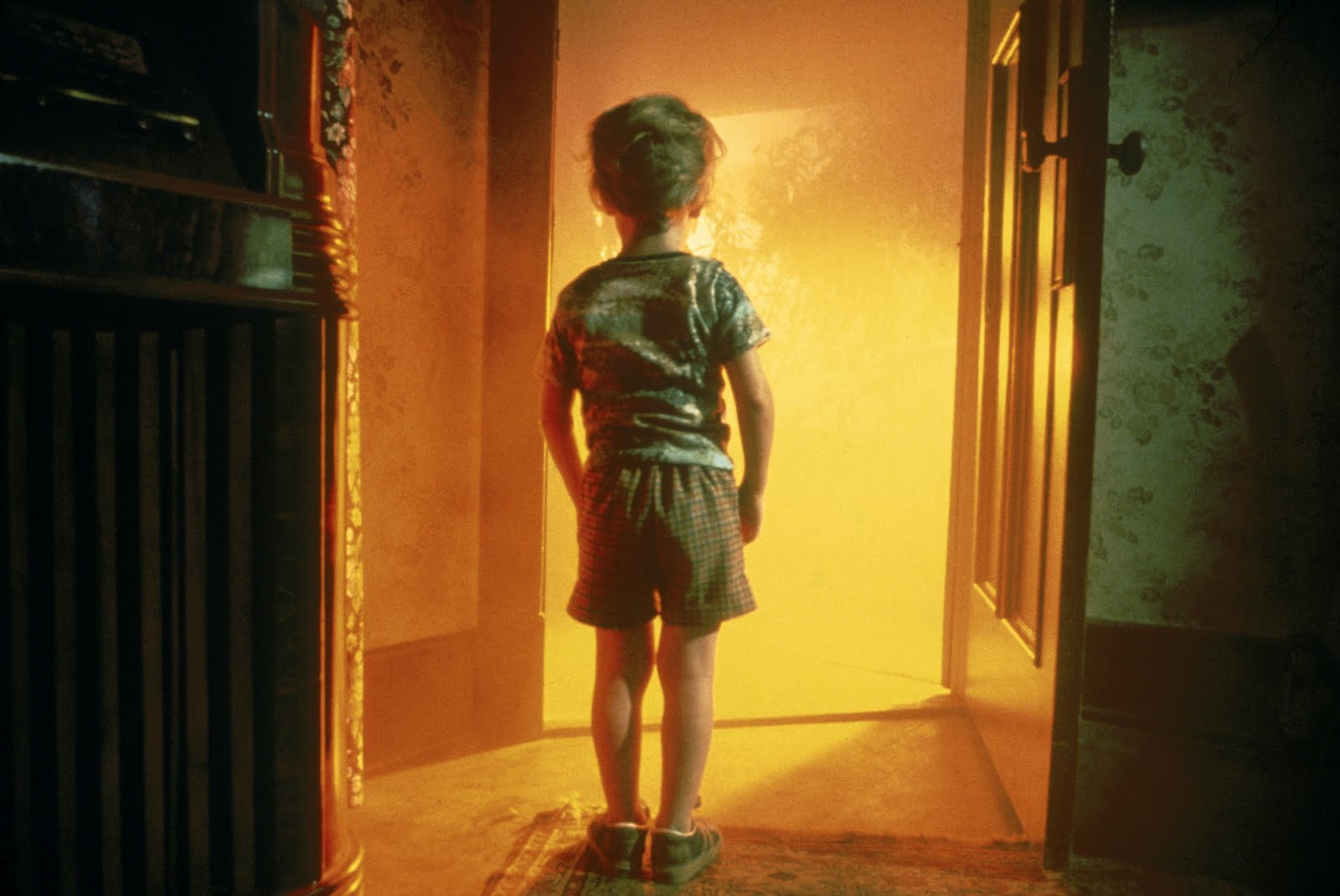
Look into the light
Close Encounters of the Third Kind (1977)
Raiders of the Lost Ark (1981)
E.T.: The Extra-Terrestrial (1982)
Poltergeist (1982)
Empire of the Sun (1987)
Schindler's List (1993)
A.I. Artificial Intelligence (2001)
War of the Worlds (2005)
Super 8 (2011)
Sunday, June 12, 2011
"Somewhere"
When he's not making snide remarks about the hit TV musical Glee (I believe he said it made him feel like he'd "just stepped into a puddle of HIV"), cult author Bret Easton Ellis usually tweets in a totally civilized manner about his current pop-culture preferences. Last January, he tweeted: "Long talk with angry, successful screenwriter yesterday about our admiration for 'Somewhere' and how its images have haunted us for weeks..."
I share Ellis' enthusiasm for the haunting imagery in Somewhere, the latest film written and directed by Sofia Coppola. Like Ellis, Coppola is often accused of making shallow art about spoiled rich people, and Somewhere won't change anybody's mind. The picture is best appreciated as a purely aesthetic experience; if you approach it any other way, it's bound to try your patience.
Stephen Dorff, an actor I've always admired because he was in two early-'90s movies I grew up loving (Judgment Night and Backbeat), plays Johnny Marco, a movie star whose personal life suffers as his professional life flourishes. His tween daughter, Cleo (Elle Fanning), is left in his custody for the weekend, and the two of them spend the movie hanging out in five-star hotels. At one point, they fly halfway around the world to attend a glitzy awards show, and their suite actually has a swimming pool in it, like Francis' bathtub in Pee-wee's Big Adventure.
I can certainly see where critics are coming from when they say Coppola seems a little, uh, out of touch. In a particularly nasty review of her 2006 film, Marie Antoinette (a delicious piece of eye candy that I find slightly alienating), the reviewer refers to her as "arguably the most successful living member of the Lucky Sperm Club." (Her dad is legendary movie director Francis Ford Coppola). And, because I love snarky reviews, let me quote some more: "Without daddy’s money backing up her efforts, Coppola’s emaciated screenplay would still be moldering on her hard drive as the author worked the 10-4 shift at the Starbucks on Figueroa." Fun to read, but not exactly true. It's easy to question Coppola's abilities as a screenwriter, but harder to dismiss her talent as an image maker. And so what if her films are about the rich and the famous? If you want stories about the working class, check out Mike Leigh or Ken Loach.
The relatively brief plot description I've included here doesn't skimp on the details. Nothing much *happens* in Somewhere; the opening shot of a Ferrari circling endlessly around a barren stretch of road should be taken as a warning to some viewers to stay away. The movie fits nicely into an ongoing debate in certain cinephile circles – sparked by a recent NY Times Magazine piece by Dan Kois, who's been criticized by Manohla Dargis and A.O. Scott and Glenn Kenny – about "slow cinema". Somewhere is like Coppola's homage to the anti-narrative indies of Jim Jarmusch and Gus Van Sant. I don't find her film as maddening as Jarmusch's The Limits of Control, nor do I find it as compelling as Van Sant's Death Trilogy. (Nothing as dramatic as dying happens in Somewhere.) Overall, I was grateful that the film offered me, in the words of Dargis, the opportunity to "meditate, trance out, bliss out, luxuriate in your thoughts, think."
As for the image that haunted me the most, it would have to be an extended shot of Johnny in a makeup chair. He's being prepped to play an elderly version of himself for his next project, and we see him as a totally blank slate, his face an eerie reflection of the emptiness he feels inside. That moment is not merely the product of "lucky sperm"; it shows an artist honing her craft. Coppola's talent is evident in everything from her casting choices (Dorff and Fanning are wonderful together) to her soundtrack selections, which never fail to amaze me. I've included a few samples below: a dreamy track by the Strokes and the opening-titles song by Phoenix (Coppola is engaged to frontman Tom Mars, whose band provides most of the music in Somewhere).
Sunday, June 5, 2011
Undead and Not Loving It
In the recent DOA comic-book movie, Dylan Dog: Dead of Night, Sam Huntington plays Marcus, a motor-mouthed paranormal investigator who gets killed off early on in the film and comes back as a zombie. Marcus' postmortem plight – his diet consists of worms and maggots – got me thinking about some of the unhappier undead movie characters. Here are some of my all-time favorites:
Louis de Pointe du Lac, Interview with the Vampire
On my ancient DVD copy, director Neil Jordan introduces Interview with the Vampire as "a movie about the saddest vampires you've ever seen." The saddest of the sadsacks is Louis (Brad Pitt), a bloodsucker with a conscience who feeds on rats, chickens and poodles because he refuses to kill another human being. A close second is Claudia, a prepubescent immortal played by Kirsten Dunst, who laments that she will "never ever grow up." These milquetoast vampires are almost TOO melancholy; when Louis and Claudia's gleeful maker, Lestat (Tom Cruise, in a flamboyant, expansively entertaining performance) exits the picture, the movie pretty much falls apart.
Jerry, The Prophecy
I remember being really excited to see this when it came out my sophomore year of high school. I'd seen Pulp Fiction about 20 times by then, and The Prophecy features three Tarantino alums (Eric Stoltz, Christopher Walken and Amanda Plummer). In addition to Walken's homicidal archangel Gabriel, the character I was most struck by was Jerry (Adam Goldberg), a sardonically depressed young man who's kept in limbo by Gabriel after committing suicide. Ol' Gabe has nothing but disdain for the human race, but he keeps Jerry not-quite-alive because "it's a big universe and some things in it are talking monkey work." Walken and Goldberg have a very funny onscreen rapport; they provide the only comic relief in this otherwise grim horror picture, one of the ickiest cinematic Bible stories to come along before The Passion of the Christ.
Ray Lynskey, The Frighteners
The main thing you need to know about Ray Lynskey (Peter Dobson) is that he's the only person who cries at his own funeral. "It's a goddamn tragedy!" he sobs, even while he's remembered as "less than generous" by those he left behind. A skeptic who has to become a ghost to believe in ghosts, Ray refuses to take the Corridor of Life to heaven because, as he explains, he's "only 29!" As an earthbound emanation, he ultimately gets to redeem himself; he clearly loves his wife, Lucy (Trini Alvarado) and tries to save her. Unfortunately for him, no good deed goes unpunished in this wicked Peter Jackson-directed horror-comedy, the second-best genre mashup of 1996 (after From Dusk Till Dawn, of course).
Moaning Myrtle, Harry Potter and the Goblet of Fire
Poor, poor Moaning Myrtle. She's destined to haunt the girls' bathroom at Hogwarts School of Witchcraft and Wizardry. (As haunting places go, bathrooms must be among the most unpleasant.) A bullied teen who was murdered by Tom Riddle himself, Myrtle is a genuinely tragic figure, but as played by the pixieish actress Shirley Henderson in the movies, she's mostly a source of annoyance and bemusement for Harry and his friends. Technically speaking, Myrtle plays a bigger part in Chamber of Secrets, but the Chris Columbus-directed Harry Potter movies are dead to me. Besides, she's a much more well rounded character in Goblet, as she helps Harry decipher a riddle that will lead him to winning the Triwizard Tournament.
Zia, Wristcutters: A Love Story
"Soon after I killed myself I got a job here at Kamikaze Pizza." Thus begins one of my favorite black-comic visions of the afterlife, right up there with Albert Brooks' Defending Your Life. Zia (Patrick Fugit) slits his wrists after his girlfriend dumps him and ends up in a dreary place populated by people who have committed suicide, where there are no stars in the sky and nobody ever smiles. (Sounds like South Florida - zing!) Like Moaning Myrtle, Zia was unhappy in real life and he's unhappy in the afterlife, suggesting that people are not only the same backwards and forwards but also alive and undead. But, as the title suggests, Wristcutters is a love story, and with Cupid's Arrow comes an opportunity for rebirth.
Wednesday, May 25, 2011
Song of the day, 05/25/2011
Monday, May 23, 2011
"The only word for this is transplendent..."
The estimable movie critic Jim Emerson recently wrote a piece for MSN movies naming the five best and five worst movies directed by Woody Allen. As a fan of the Woodman, I thought I'd toss my hat into the ring and name my picks as well.
I was surprised by how difficult it was to come up with five films deserving of a "worst" list. For all the talk about how Allen's career has declined over the past decade or so, he really is an American master. A great number of directors working today have given us terrific movies to watch (just look at this year's lineup at the Cannes Film Festival, where Allen earned raves for his latest, Midnight in Paris), but I'm not sure there's another one who's made so goddamn many. If I could have expanded my "best" list, I might have included Vicky Cristina Barcelona, Bullets Over Broadway, Deconstructing Harry, Husbands and Wives, The Purple Rose of Cairo, Zelig, A Midsummer Night's Sex Comedy, Manhattan, Radio Days and Match Point.
Alas, I decided to stick with five. After much Woody Allen-style hemming and hawing ("Oh, jeez..."), here are my picks:
Best
1. Hannah and Her Sisters
2. Crimes and Misdemeanors
3. Annie Hall
4. Stardust Memories
5. Love and Death
Worst
1. You Will Meet a Tall Dark Stranger
2. Melinda and Melinda
3. Anything Else
4. Shadows and Fog
5. Hollywood Ending
Friday, May 20, 2011
Dudley and Harry
One of my favorite scenes in J.K. Rowling’s Harry Potter and the Deathly Hallows comes early on – around page 40 of the 750-page plus tome. We’re inside No. 4 Privet Drive, the place where the 16-year-old wizard Harry Potter has spent the unhappiest years of his childhood. As the Dursleys prepare to flee, lest they be tortured and killed by the evil Lord Voldemort and his minions, Harry’s mean-spirited cousin Dudley surprises everyone when he tells the teenage wizard: “I don’t think you’re a waste of space.” As Harry explains, “Coming from Dudley that’s like ‘I love you.’”
I think what I like most about that scene is that it’s one of the few moments in the entire seven-part series where a character makes a genuine change. Other characters in the series are *misunderstood*, to be sure; Severus Snape comes to mind (is there another character in modern fiction who plays it so closely to the vest?), and Albus Dumbledore is certainly misunderstood throughout much of Deathly Hallows; he gets posthumously slimed by the mainstream media, and even Harry begins to doubt his beloved headmaster. But hardly anyone goes through quite the transformation that Big D does here.
You can imagine my disappointment when the scene didn’t make the theatrical cut of Harry Potter and the Deathly Hallows, Part 1. The deleted scene that's included on the DVD is an even BIGGER disappointment. It got me thinking about how the Potter movies have failed in some ways to clearly tell Rowling’s epic story, and how film adaptations in general offer two different experiences: one for fans of the source material, and another for non-fans.
As you may have gathered, I count myself among the countless admirers of the Potter novels. As Stephen King has said, they’re “just fun, pure story from beginning to end.” Like most Potter fans, I’ve been mostly pleased with the 6.5 film adaptations thus far. (Of the bunch, Alfonso Cuaron’s Prisoner of Azkaban is the most stylish, but the one I find myself returning to most often is Mike Newell’s Goblet of Fire; sans Quidditch, Goblet is a scarily accurate portrait of the teen years.) I can be a pretty tough movie critic when I’m a fan of the book. For example, I simply didn’t *get* Sean Penn’s adaptation of Into the Wild. Author Jon Krakauer brought his readers so close to the soulful odyssey of Christopher McCandless that, for me, that was the definitive telling of that story; Penn simply couldn’t compete. And yet that’s a much-loved movie; it currently holds an astonishing 8.2 user rating on IMDb, making it the 145th most popular movie on that website. (I’d like to think a lot of those users haven’t read the book.) IMHO, the movie is a jumbled mess.
That's an apt description of the deleted scene on the Deathly Hallows DVD, which is titled simply Dudley and Harry. The action is moved from the house to the street, where the Dursleys are piling into their Muggle car. Dudley lumbers over to his cousin, offers his hand and says, “I don’t think you’re a waste of space.” This is met with a somewhat chilly response by Harry. (In the book, Harry is genuinely moved.) It doesn't help that the scene is technically incomplete; green screens are visible in several shots, giving Privet Dr. a decidedly unfinished look. Another distraction: the bloated, bizarre appearance of the young actor who plays Dudley, which may explain why he’s filmed in long shot when we first see him, making it difficult for us to gauge his emotions.
The scene will be especially hard to follow for viewers who haven't read the books. The event that led to Dudley’s change of heart – Harry saving him from the Dementors – happened a lifetime ago. In the book, Rowling does a quick recap so as to jog our memory. But in the movie, the filmmakers expect us to remember something that happened at the very beginning of Half-Blood Prince, without the benefit of flashbacks. A lot has gone on since then (like, say, the death of Dumbledore.)
Of course, readers will remember what Harry did for Dudley. Reading the books has always been a kind of prerequisite for completely understanding the movies. Take the ending of Chamber of Secrets. I found it very moving when the students of Hogwarts erupted in applause at the sight of Hagrid, but my dad (who’s more of a Tolkien fan than a Potterhead) thought that scene was bizarre; why were the kids applauding this hairy giant who’d been given so little screen time? My dad rightly guessed that Hagrid is a way bigger deal in the books than he is in the movies. Similarly, when I saw Half-Blood Prince with a friend (who hasn't read the books, either), I had to remind him that there’d always been some question as to whether Snape was a good guy or a bad guy. What's etched indelibly in the minds of Potterheads is merely sketched in the minds of the uninitiated. People usually say, “Read the book instead.” In the case of the Harry Potter movies, I think the best piece of advice is, “Read the book FIRST.”
Tuesday, May 10, 2011
Quote of the day, 05/10/2011
"Sometimes I don’t even want to see his pictures when they come out. But I finally get there, and it’s a cathartic experience for me to go through. Cronenberg is twentieth century. *Late* twentieth century. Cronenberg is something that we unfortunately have no control over, in the sense that we have no control over the imminent destruction of ourselves. That’s what is so clear about his work. So frightening. So upsetting."
–Martin Scorsese, Cronenberg on Cronenberg, 1992
Subscribe to:
Posts (Atom)


